
Check the chemicals. A key task in maintaining your pool is monitoring the chemicals to ensure they are properly balanced. If not, the mixture may irritate your skin and eyes and allow bacteria to set up a breeding program in your pool!
testing kits are available at any pool store to evaluate the various chemical levels: cyanuric acid, free chlorine, ph balance, total
alkalinity
and calcium hardness.
 Adjust the levels accordingly to achieve proper balance. The water should be clear, have no scent and leave a little residue on the skin. Baking soda’s best. If your pool needs its ph level adjusted, try baking soda rather than an expensive chemical solution.
December 26, 2018 davy merino welcome to the pool lifestyle! along with the hours of fitness, fun and family togetherness, there comes the hours of pool maintenance. Every single day of summer, your pool pump must circulate the water, your filter must clean the water and the feeder must dispense enough chlorine to kill the ever present bacteria and algae. In addition to that, you may also have automatic cleaners or pool heaters that require monitoring and cleaning or adjustment. And you or someone like you, will be called upon to empty skimmer baskets, brush and skim the pool, test the water and make sure all systems are operating as intended.
Water chemistry goes beyond chlorination. By regularly testing your pool water, you can monitor for other potentially damaging factors such as: alkalinity: alkaline levels that are too high or low result in cloudy water. The recommended alkalinity in a swimming pool is 80-120 ppm. Ph: a ph imbalance can cause pool equipment to corrode and invites the risk of algae growth. It is recommended that your pool water measure out between 7. 4-7. 6 on the ph scale. Chlorine: you should read your pool’s instruction manual on proper levels of chlorine. Too much can damage swimmers’ skin, while too little allows bacteria and other microbes to grow.
6. Create a Pool Cleaning Schedule
On a searing summer day, a swimming pool is a welcome respite from the heat. But before you can dive into its cool blue water, you have to perform all the maintenance drudgery that prolongs its crystal-clear perfection. This often makes a backyard pool more of a burden than a blessing. In the interest of spending more time in the pool than maintaining it, we went for advice to william sodergreen, chief technician for shoreline pools service inc.
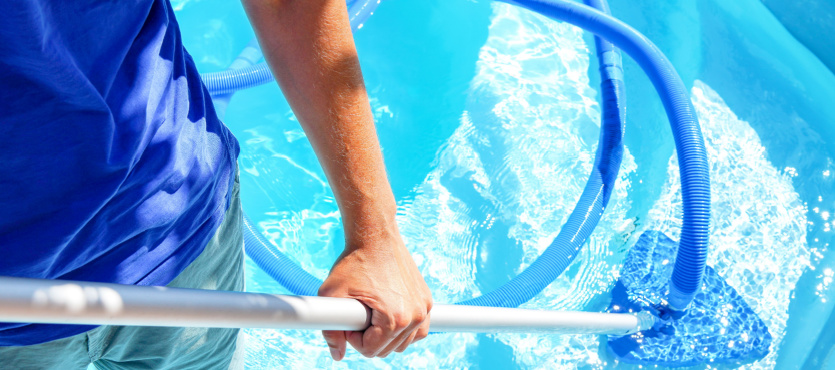
, in connecticut, a guy who has the weekly cleaning ritual down to a science. He can skim, vacuum, clean, and chlorinate in under an hour, not much more time than it takes to suit up, slather on sunscreen, and get out the inner tube.
Draining the pool water and removing any debris is the first step in the resurfacing process. This is important for accessing the entire surface of the pool and ensuring a clean and smooth surface for the new resurfacing material to install properly. The pool should then be thoroughly cleaned by using an acid wash or similar cleaning method. It is crucial to remove the hydrostatic plug or to drill holes in the pool floor to ensure that there is no hydrostatic pressure that might pop up the pool. Also, prior to any resurfacing, if the pool is suspected of a leak, a full leak detection should be performed, as often customers believe that a new finish will solve a leak, but a new finish does not fix or create leaks in a pool.
In pool cleaning , pool maintenance basic pool maintenance tips2020-09-172021-04-21https://www. Shorelinepools. Com/wp-content/uploads/2018/02/shoreline_stickly_logo. Pngshoreline poolshttps://www. Shorelinepools. Com/wp-content/uploads/2016/03/contemporary_and_dramatic_2. Jpg200px200px keeping up with maintaining your luxury swimming pool can be tiring, and takes away your precious relaxation time. But when you follow the right steps and know when to ask for help, pool maintenance isn’t that difficult from custom pool installations, renovations, design services, and construction services, the shoreline pools team provides unique craftsmanship to ny & ct customers, as well as unmatched expertise to maintain each client’s vision. Still, every pool owner should understand the fundamentals of basic pool maintenance. Here is a basic guide to pool maintenance created by the in-ground pool experts at shoreline pools.
No matter what time of year it is, it’s important to keep your pool in tiptop shape so it’s ready to go whenever needed. If you are new to the pool ownership world, you probably have a lot of questions—and we can help! this blog will go over several basic (but important) tips every pool owner should know for maintaining a clean, healthy pool throughout the swim season. We’ve broken these tasks down according to how often you should be performing and/or scheduling a pool service for them.
Here’s the part of being a new pool owner that’s not so fun. Pool maintenance. We’ll be honest, good pool maintenance, the kind that keeps your pool clean and looking crystal clear, takes a bit of work. But it doesn’t have to be hard, or even complicated. In fact, if you follow just a few pro tips, pool maintenance can be pretty easy. But before anything, the most important thing to do is to make a pool care schedule. This outlines when and how often you’ll do each pool maintenance task throughout the month. And while it may not seem necessary to keep track of this, you’d be shocked to find how much easier taking care of your pool is when you break it up into easy, bite sized chunks.
Properly maintaining your swimming pool is important for several reasons. First, regular cleaning and chemical treatment can prevent the growth of harmful bacteria and algae, ensuring that the water is safe for swimming. Second, regular maintenance can prolong the life of the pool and its equipment, saving money in the long run. A well-maintained pool can improve the overall appearance and enjoyment of the space. Below, we look at some maintenance tips to keep your swimming pool in excellent condition throughout the year.