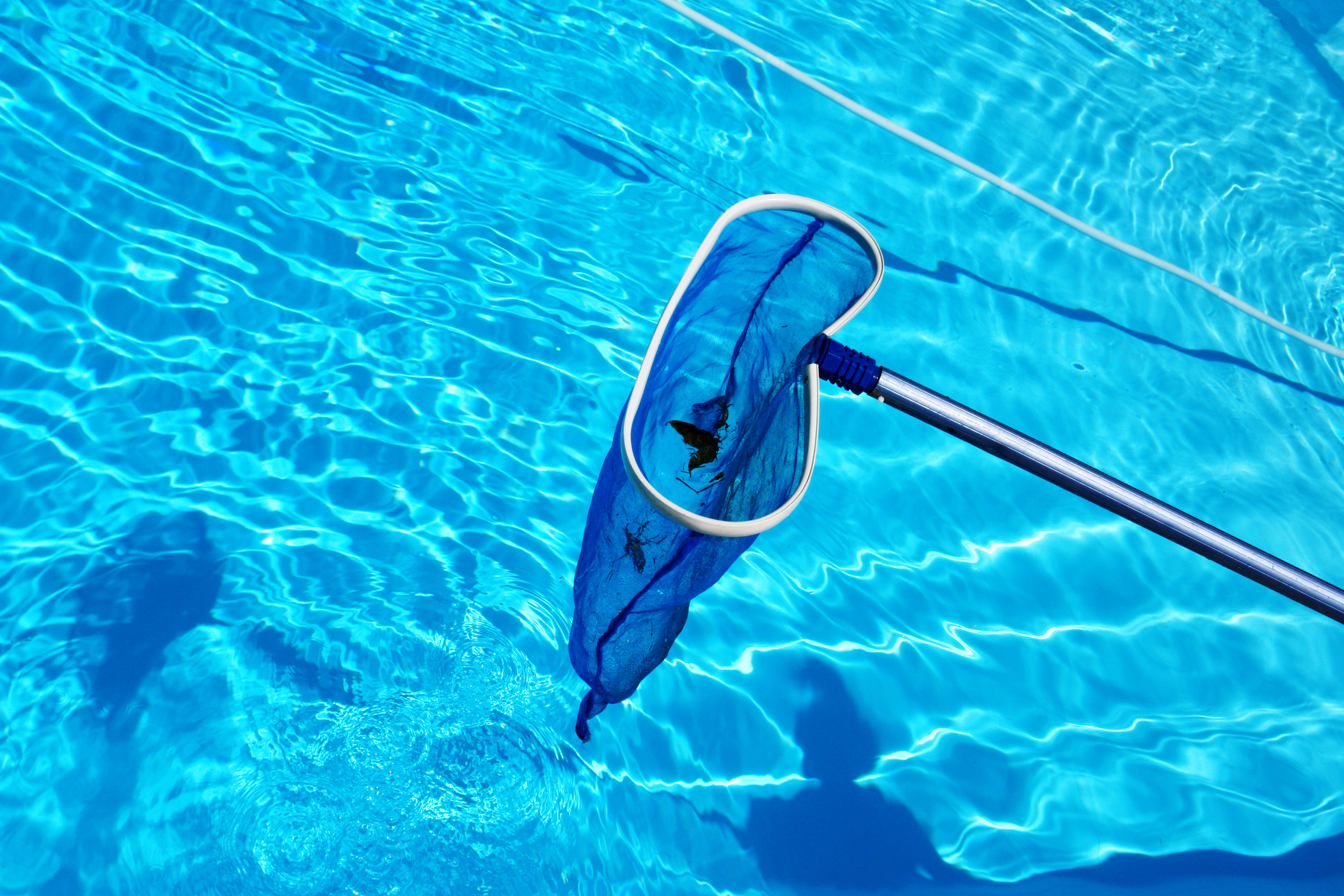
Remove leaves and other debris with a
pool
skimmer.

If your pool tends to collect a higher-than-average quantity of leaves or other ambient debris, you may want to consider a robotic pool cleaner with a larger-capacity filtration system. This will ensure the cleaner can complete a full cycle before requiring user intervention. The polaris 9650iq sport and dolphin wave 80 are our favorite picks for pools that collect lots of debris. Will a cordless robotic pool cleaner work better for your needs? in pools or areas with limited access to wall power, a cordless robotic pool cleaner outfitted with onboard batteries may be better for your needs. Our budget pick, the aiper seagull se , performs very well despite its relatively short 90-minute cycle duration.
3. Use a brush
Pool cleaning tools
a magic eraser or other cleaning sponge can come in handy when it’s time to clean your pool steps — not to mention scum lines. You’ll need a bristle brush to gently scrub algae away from the floor, walls and steps of your pool. Whether your swimming pool is vinyl liner or fiberglass, make sure to choose a brush with soft nylon bristles, which will help you avoid accidentally scratching and damaging your pool liner. Always remember to test these tools in a discrete place before using it in highly-visible areas. Learn more about cleaning your pool steps below.
Robotic vs. Non-robotic: a robotic pool cleaner is a pool cleaner that uses software to determine how to clean your pool. A non-robotic pool cleaner includes manual devices, like a brush or net. Above-ground pool: an above-ground pool refers to a pool that is not built in to the ground. They're typically made of aluminum or steel and are a less expensive pool option. In-ground pool: in-ground pools are pools that are dug in to the ground. They're typically made of concrete, fiberglass, or vinyl. What we tested.
Real simple / anna knief pool owners know that keeping a pool cared for takes serious work and commitment. No matter how often you use it, it’s imperative that your pool gets cleaned frequently so it can be in the best shape for swimmers. Thankfully, there are plenty of high-quality pool cleaners you can use to get the job done. “automatic pool cleaners are a convenient way to keep your pool clean and ready to use with less fuss and bother,” says gary hohne, president and ceo of pool service company brighton pools. “although they won’t completely eliminate manual cleaning and maintenance, automatic cleaners do help reduce the need for brushing, skimming, and vacuuming the pool.
You'll encounter three main styles of pool cleaners: suction, pressure, and robotic. Each has its own benefits, and you need to decide which is best for you. Stewart vernon, coo and founder of america’s swimming pool company, says that suction pool cleaners "use a random pattern to continuously clean the pool ground and wall sides. Although cheaper initially, suction cleaners may add to your electric bill with each use by using your pump system. ”“pressure cleaners are moderately priced and rely on your pool’s pump and filter, which can also increase your electric bill,” he says. “unlike the suction cleaner, pressure cleaners use a booster pump to increase pressure.